
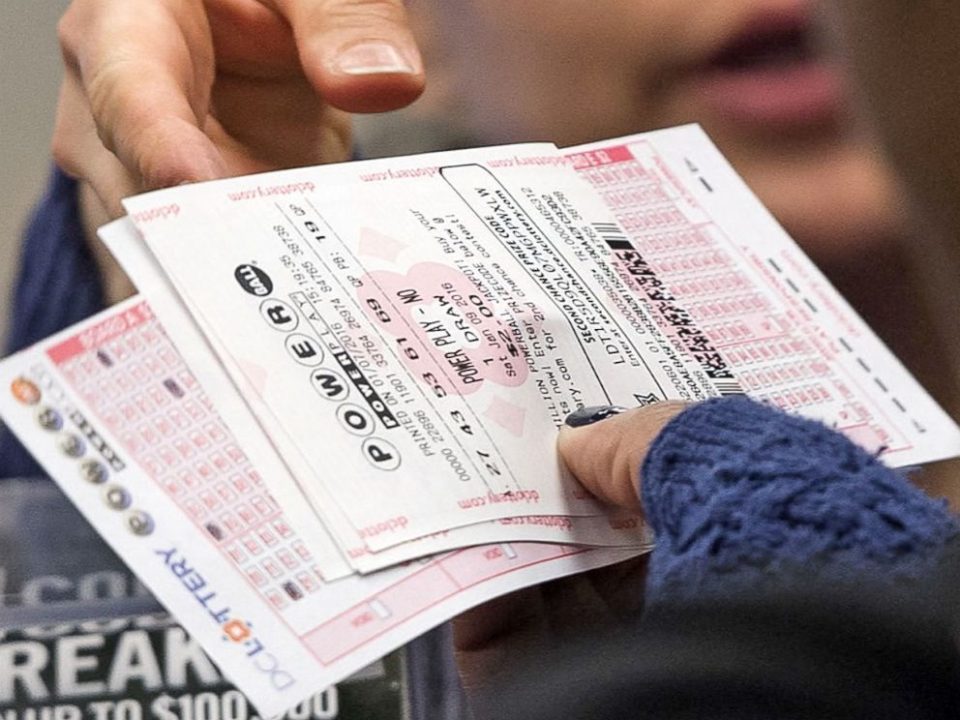
The lottery is one of the most widespread forms of gambling in the world, drawing participation from millions of individuals across diverse socioeconomic backgrounds. At its mathematical core, the lottery is a game of pure, unadulterated chance. Every individual number combination has the exact same statistical probability of being drawn from the machine. Despite this objective reality, very few players choose their numbers completely at random. Instead, the process of picking lottery numbers serves as a fascinating window into human psychology. When faced with a blank grid, the human mind rejects raw randomness, opting instead to project meaning, narrative, and personal control onto a system governed entirely by mathematical variance.
The Evolutionary Rejection of Randomness
To understand why players pick specific numbers, one must first look at human evolutionary biology. The human brain is essentially a highly sophisticated pattern-recognition machine. Throughout evolutionary history, our survival depended heavily on our ability to detect order and causal relationships in our environment, such as recognizing weather cycles, animal migration paths, and seasonal plant growth.
When confronted with a completely chaotic system like a randomized lottery draw, the brain experiences a form of cognitive discomfort. To mitigate this tension, the subconscious mind instinctively searches for structural patterns where none exist. This cognitive bias leads individuals to believe that certain combinations are more natural or inherently luckier than others. While a computer algorithm sees the sequential string one, two, three, four, five, six as completely identical in probability to a scattered mix of digits, the human brain rejects the sequential string as highly unnatural, viewing it as an impossible outcome for a random draw.
The Anchoring Effect of Meaningful Calendrical Dates
The most common strategy deployed by casual lottery participants is anchoring their choices to significant personal milestones. This manifests as selecting birth dates, wedding anniversaries, and the ages of immediate family members.
While this habit provides a strong sense of emotional connection to the ticket, it introduces a severe mathematical restriction that players rarely consider consciously. Because traditional calendar dates only span from one to thirty-one, players who rely strictly on birthdays and anniversaries inadvertently cluster all their selections within the bottom half of the available number grid. If a state lottery requires selecting digits up to fifty or sixty, these players completely omit the upper registers of the matrix. While this does not lower their individual odds of winning the jackpot, it dramatically increases the mathematical likelihood that they will have to share the prize pool with dozens of other winners, as millions of competing players utilize the exact same date-based parameters.
Cognitive Biases and the Control Illusion
A major psychological driver in the wagering landscape is the illusion of control. This cognitive bias describes the tendency for people to believe they can influence an entirely random outcome through their personal actions, skill, or specific physical choices.
In the context of the lottery, this bias explains why a significant percentage of players strongly prefer picking their own numbers manually rather than utilizing the automated quick-pick function at a retail terminal. The act of deliberately writing down digits creates a false sense of agency. The player feels that their personal intent, focused concentration, or intuitive gut feelings give them an edge over the machine. When the automated terminal prints a random selection, the player feels disconnected from the outcome, viewing it as cold and sterile. By actively choosing the numbers, the player takes emotional ownership of the ticket, transforming a cold mathematical coin flip into a highly personal test of fate.
The Influence of Numerology and Cultural Associations
Human cultures have long imbued specific numbers with profound symbolic meanings, spiritual significance, and historical weight. These cultural narratives play a significant role in how individuals distribute their choices across a lottery card.
-
The Universal Appeal of Lucky Seven: In Western societies, the number seven is widely considered the ultimate symbol of good fortune and divine perfection. Consequently, seven is consistently one of the most heavily selected single digits on lottery tickets worldwide.
-
The Avoidance of Triskaidekaphobia: On the opposite end of the spectrum, the number thirteen carries a heavy burden of historic superstition, representing bad luck and misfortune. Lottery operators track distinct drop-offs in the selection rate of thirteen, proving that ancient cultural fears actively shape modern consumer transactions.
-
Localized Cultural Variations: In Chinese culture, the number eight is highly sought after because its pronunciation closely mirrors the word for wealth and prosperity, whereas the number four is strictly avoided due to its phonetic association with death.
These deeply ingrained cultural paradigms act as invisible boundaries, directing capital flows toward specific sectors of the number matrix based entirely on linguistic and historical coincidences.
The Gambler Fallacy and the Illusion of Due Numbers
When players decide to move past purely sentimental numbers, they often turn to historical draw data to inform their choices. This analytical approach frequently leads directly into a psychological trap known as the gambler fallacy.
This cognitive distortion occurs when a person believes that a specific random outcome is due to happen simply because it has not occurred recently. Players scrutinize historical charts to identify cold numbers, which are digits that have not emerged from the drawing machine for several weeks or months. The underlying assumption is that the laws of probability dictate an immediate corrective balance, making the cold number ripe for selection. The mathematical reality is that the drawing machine holds absolutely zero memory of past events. Every draw resets the probability matrix to its original baseline state, meaning a number that was drawn last night has the exact same statistical chance of appearing tonight as a number that has been missing for a year.
Visual Symmetry and Aesthetic Patterns on the Grid
For a unique segment of the player population, the physical act of selecting numbers is guided primarily by visual aesthetics rather than numerical concepts. When presented with a grid-style paper slip, these individuals focus on creating pleasing geometric patterns across the card.
Players often fill out cards by drawing vertical lines, clean diagonal strips, perfect checkmarks, or symmetrical boxes. Others follow specific hopping patterns, skipping a fixed number of squares between each selection to maintain visual balance. While this approach bypasses the emotional weight of birthdays and dates, it creates a massive structural risk. Because humans share uniform concepts of visual design and symmetry, thousands of different players end up marking identical geometric configurations on their slips. If a visually symmetrical pattern happens to hit the winning combination, the shared nature of the design guarantees that the prize pool will be fractured among an immense number of co-winners, trivializing the individual payout.
Frequently Asked Questions
Why do people often choose the exact same set of numbers for decades without deviation?
This habit is driven by a profound psychological fear of regret. If a player changes their standard numbers after years of loyalty and those original numbers happen to appear in the very next draw, the resulting emotional devastation would be catastrophic. To avoid this unbearable sense of hypothetical regret, players remain locked into the exact same combination indefinitely, treating the ticket as an unbreakable routine.
Does choosing rare or unpopular numbers improve a player individual odds of winning the jackpot?
No, picking unpopular numbers does not alter the absolute probability of winning the jackpot, as every valid combination possesses the exact same mathematical chance of being drawn. However, choosing rare numbers is a highly sound financial strategy because it minimizes the probability of sharing the jackpot with other ticket holders, ensuring that if you do win, you secure the entire financial prize pool for yourself.
How does the size of a surging jackpot alter the number selection habits of the public?
When a jackpot scales to historic levels, it draws a massive influx of casual, infrequent players into the market. Data indicates that these casual participants rely far more heavily on automated quick-picks and sentimental birth dates than dedicated hobbyists do. This causes a massive, disproportionate surge of capital to flood the lower registers of the number matrix during major rollover events.
What is the specific psychological appeal of the lucky dip or quick-pick option?
The quick-pick option appeals to individuals who prioritize absolute convenience, speed, and the elimination of decision fatigue. For these players, the cognitive effort of choosing numbers feels stressful or tedious. By outsourcing the selection process to the computer, they embrace the cold, random nature of the game, viewing the ticket as a simple, low-effort entry ticket into a mass entertainment draw.
Why do many players actively avoid choosing consecutive numbers like 24 and 25?
This avoidance stems from the representational heuristic, a cognitive shortcut where people judge the probability of an event by how closely it matches their generalized mental image of randomness. Because winning numbers usually appear scattered across the grid, the human mind develops an inaccurate belief that consecutive numbers are mathematically impossible, completely ignoring the fact that consecutive pairs occur in a vast percentage of random draws.
How do quick-pick tickets affect the overall distribution of numbers across a lottery system?
Automated quick-pick algorithms utilize modern digital random number generators to ensure that every available digit across the entire matrix has an equal probability of selection. Consequently, a market dominated by quick-pick tickets features a perfectly uniform statistical distribution of numbers, completely neutralizing the natural human biases that cluster manual tickets around dates and lucky symbols.
